

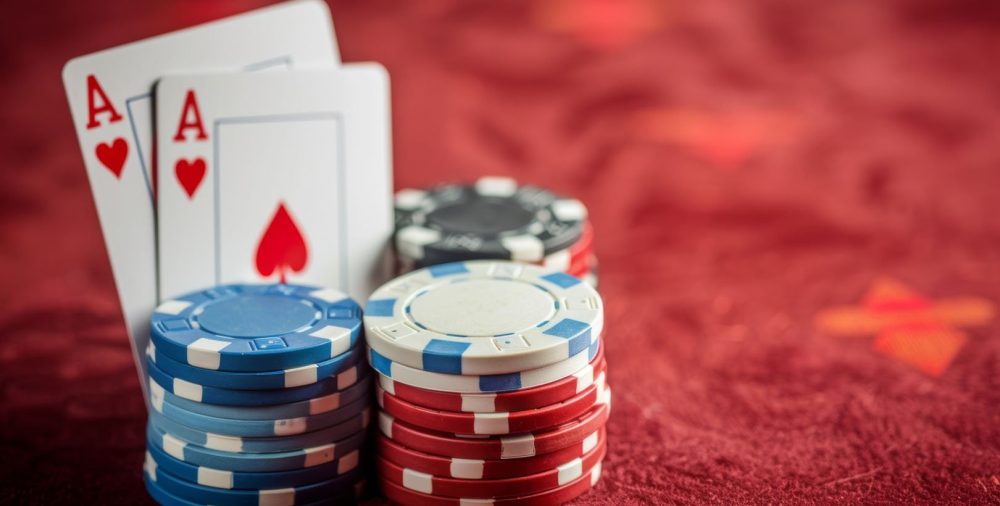
Poker has long been romanticized as a game of luck, but in reality, it is a highly analytical, psychological, and strategic pursuit where skill consistently outweighs chance over time. In 2025, poker continues to captivate players worldwide, blending mathematics, behavioral science, and decision-making under uncertainty. Understanding poker in depth means grasping its fundamental concepts—expected value, range construction, risk tolerance, and psychological warfare—rather than relying on superstition or intuition.
In this guide, we will explore poker as a structured discipline: the science of probabilities, human behavior, and edge exploitation that defines elite-level play.
Understanding Poker as a Game of Strategy
Poker is not a game of random luck. It’s a strategic contest of incomplete information, where players must make the best possible decisions using probability, game theory, and psychology. While luck influences short-term results, skill and consistency determine long-term profitability.
Each hand in poker presents a decision tree of possibilities—bet, call, raise, or fold—based on both visible data (board texture, pot size) and hidden variables (opponent tendencies, position, stack size). Winning players use quantitative reasoning and pattern recognition to make choices that yield a positive expected value (EV).
The core of professional poker is not card selection, but decision optimization. Success depends on making better decisions more consistently than your opponents.
The Mathematics of Poker
Probability and Expected Value
Every move in poker can be evaluated through expected value (EV), a measure of how profitable a decision is over the long run.
Formula:
EV = (Probability of Winning × Amount Won) – (Probability of Losing × Amount Lost)
A positive EV (+EV) decision is profitable over time, while a negative EV (–EV) decision leads to losses. Top players focus on maximizing +EV situations, regardless of individual hand outcomes.
For example, if you have a 60% chance to win a $200 pot and must call $100, your EV is:
EV = (0.6 × 200) – (0.4 × 100) = 120 – 40 = +80
This means the call is profitable long-term, even if you lose occasionally.
Pot Odds and Implied Odds
- Pot odds help you determine whether calling a bet is mathematically justified. If the pot offers greater odds than your drawing odds, it’s a profitable call.
- Implied odds go further, estimating additional chips you might win on later streets when you hit your hand.
Understanding these odds separates casual players from analytical thinkers. Skilled players also calculate reverse implied odds, identifying situations where winning a small pot risks losing a much larger one later.
The Power of Position
Position is one of the most overlooked yet essential concepts in poker. Acting later in a hand gives you informational advantage—you can see how opponents act before making your decision.
- Early position (EP) players act first and must play tighter ranges.
- Middle position (MP) players can open up slightly.
- Late position (LP), especially the button, allows for wider hand selection due to more information.
This simple principle often determines the profitability of a session. For example, a mediocre hand like King-Ten suited might be folded in early position but raised in late position, where the informational advantage compensates for weaker starting strength.
Psychological Warfare in Poker
While poker relies on mathematical precision, psychology plays an equally crucial role. Reading opponents, identifying patterns, and disguising your own intentions is key to gaining an edge.
The Art of Reading Opponents
Elite players observe everything: betting patterns, timing tells, table talk, even breathing rhythms. These small details reveal valuable insights about an opponent’s confidence, bluff frequency, or hand strength.
Key psychological markers include:
- Timing tells: Quick checks often indicate weakness, while long pauses can signal difficult decisions or bluff considerations.
- Bet sizing: Overly large bets may represent polarization—either a strong hand or a complete bluff.
- Behavioral consistency: Observing deviations in demeanor or posture can reveal when a player feels uncomfortable.
Bluffing and Image Control
Bluffing is not about random deception but strategic manipulation of perception. Successful bluffing depends on:
- Credible storylines that align with the community cards.
- Selective frequency, ensuring you bluff just enough to remain unpredictable.
- Table image management, so opponents believe your narrative.
A skilled player controls how others perceive their aggression, creating confusion that forces mistakes.
Game Theory Optimal (GTO) vs Exploitative Play
In modern poker, two dominant strategic frameworks define professional play: Game Theory Optimal (GTO) and exploitative strategy.
Game Theory Optimal (GTO)
GTO poker is a balanced strategy that makes you unexploitable. By playing mathematically perfect frequencies, opponents cannot gain an advantage, regardless of their strategy. GTO is based on equilibrium theory, where each decision (bet, check, fold) is weighted to ensure overall balance.
For example, if you bluff the right percentage of the time, even the best players cannot exploit your play. Advanced solvers now calculate these optimal frequencies across multiple board textures and positions.
Exploitative Play
While GTO provides protection, exploitative play maximizes profit by identifying opponent weaknesses and deviating from balanced strategies. This approach requires observation and adaptability—spotting patterns like overly tight folds or excessive aggression and adjusting accordingly.
The most profitable professionals combine both: using GTO as a baseline while exploiting inefficiencies when they appear.
Bankroll Management and Risk Discipline
Professional poker is as much about financial control as technical skill. Without bankroll management, even the most skilled players can go broke during inevitable downswings.
Bankroll Rules
- Cash games: Maintain at least 30–50 buy-ins for your stake level.
- Tournaments: Have 100+ buy-ins due to high variance.
- Sit & Go formats: 50–100 buy-ins recommended.
Proper bankroll allocation ensures you can survive variance without emotional or financial collapse.
Emotional Stability
Variance—streaks of wins and losses—is an unavoidable part of poker. Emotional discipline prevents “tilt,” the state where frustration overrides rational decision-making. Professionals train mental resilience through mindfulness, structured breaks, and performance tracking.
The Role of Technology in Modern Poker
Technology now drives poker evolution. Advanced analytics tools, solver programs, and real-time data visualization have transformed how players study and compete.
Solvers and Data-Driven Training
Poker solvers simulate countless hand scenarios to generate GTO-based recommendations. They help players:
- Refine bet sizing and frequency decisions.
- Identify common leaks in hand ranges.
- Analyze post-flop equity distribution.
However, while solvers enhance understanding, real-world application still demands human intuition and adaptability.
Online vs Live Play
Online poker offers volume and data analysis advantages, while live poker emphasizes reading body language and managing physical tells. Successful players often blend both formats, using online precision to sharpen mathematical skills and live play to develop emotional intelligence.
Risk, Reward, and the Long-Term Edge
Poker mirrors life in its balance between risk and reward. Every decision carries potential loss, but disciplined players embrace uncertainty to extract long-term value.
Success in poker doesn’t mean winning every session; it means making consistently correct decisions that yield profit over thousands of hands. The ability to detach from short-term results and focus on process-based metrics—like expected value, positional advantage, and equity realization—is what defines mastery.
FAQ
Q1: Is poker a skill game or gambling?
Poker is primarily a skill-based game. While luck affects short-term outcomes, consistent winners rely on probability, psychology, and long-term decision-making.
Q2: How do professionals handle losing streaks?
They rely on bankroll management, emotional control, and reviewing data to verify that they are still making +EV decisions. Losing is part of variance, not necessarily bad play.
Q3: Are online poker strategies different from live poker?
Yes. Online play favors data analysis and multi-tabling efficiency, while live poker rewards physical observation and social dynamics. Both require separate skill sets.
Q4: What is the most important poker skill?
Adaptability. The best players continuously adjust strategies based on opponent behavior, table dynamics, and evolving meta-games.
Q5: Can artificial intelligence beat human poker players?
AI systems have surpassed humans in specific heads-up formats, but multi-player environments remain complex. Human intuition and unpredictability still hold an edge in dynamic games.
Poker, at its highest level, is a strategic science of decisions under uncertainty. Mastery lies not in cards dealt, but in how you interpret data, control emotion, and outthink your opponents. By embracing mathematical logic, psychological insight, and disciplined bankroll management, poker becomes not just a game—but a lifelong study of probability, patience, and human behavior.
